What are the advantages and disadvantages of dry-type transformers?
10-20 2025 | By:
Dry-type transformers rely on air convection for cooling and are usually used for local lighting and electronic circuits. Simply put, a dry-type transformer refers to a transformer whose core and windings are not immersed in insulating oil. However, this type of transformer has many significant features:
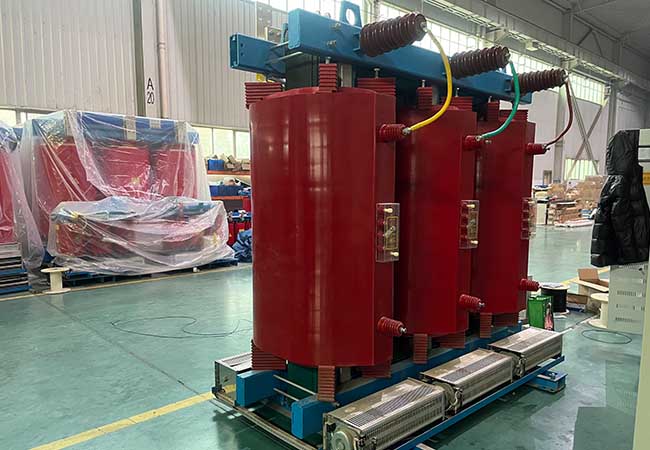
Dry-type transformers
1. Safety: Dry-type transformers do not contain flammable resins, do not support combustion during use, are flame retardant, will not explode or release toxic gases, will not cause harm to the environment, other equipment and human body, and are insensitive to humidity, dust and pollution. There is no partial discharge during operation and no possibility of “cracking”.
2. Reliability: High and low voltage coils use NOMEX insulation material, which is repeatedly impregnated with H-class solvent-free impregnation paint by VPI vacuum pressure equipment and cured by multiple high-temperature baking. The product is H-class (180), while the main insulation material is C-class (220), with strong overload capacity and good short-circuit resistance. Under good ventilation conditions, 20% overload operation is allowed.
3. Energy-saving and environmentally friendly: At the end of the product’s lifespan, steel and other materials are easily recyclable; all NOMEX paper used does not release toxic substances when burned; other insulation materials are biodegradable and environmentally friendly; product loss is low, saving energy; and the design is low-noise and flexible.
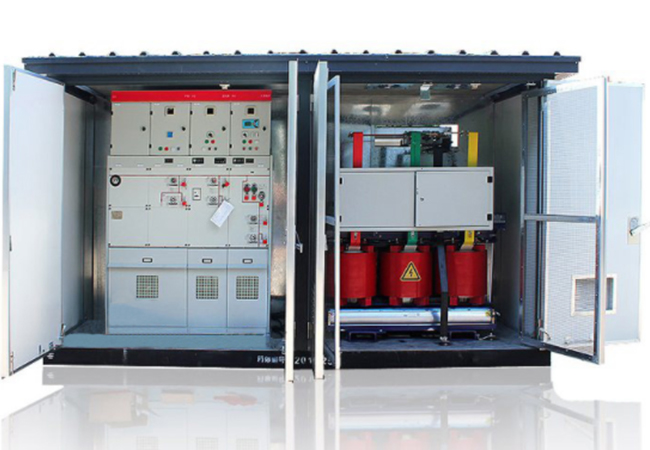
Because dry-type transformers contain no oil, they are not subject to fire, explosion, or pollution. Therefore, electrical codes and regulations do not require dry-type transformers to be placed in a separate room. This reduces losses and noise to a new level, creating the opportunity for the transformer and low-voltage panel to be placed in the same distribution room.
dry-type transformers Advantages :
1. Excellent fire resistance, contains no flammable resins or toxic gases, and is flame-retardant and self-extinguishing.
2. Low loss and noise.
3. Pollution-free and maintenance-free.
4. Excellent insulation, no partial discharge, and strong lightning strike resistance.
5. Excellent mechanical strength, with strong resistance to temperature fluctuations and short circuits.
6. Moisture-resistant, capable of operating in high humidity.
7. Economical installation, requiring no special foundation, and can be installed alongside the load center.
8. Small size and light weight
9. Automatic temperature monitoring and protection
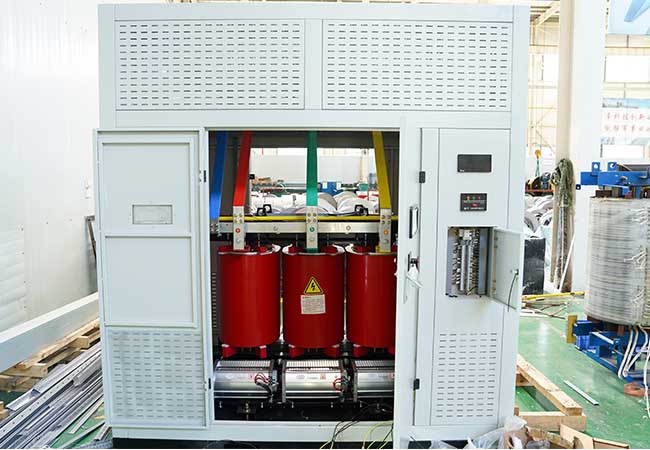
Dry-type transformers
Dry-type transformer disadvantages:
1. High cost and poor resistance to harsh environments. Generally, they can only be installed indoors.
2. If a dry-type transformer coil breaks, it is immediately scrapped.
3. Dry-type transformers are durable, and the probability of winding failure is very low. However, if a failure occurs, the entire system needs to be changed, requiring only the high and low voltage windings to be replaced.
6-35kV epoxy resin cast dry-type transformers, 11kV dry-type transformers, 20kV dry-type transformers, and 33kV dry-type transformers. CB, CCC, UL, and KEMA certified. Products have been exported to countries and regions such as Uzbekistan, Pakistan, Zimbabwe, Tanzania, Ethiopia, South Africa, Kuwait, Iraq, the UAE, Vietnam, and Spain. With 30 years of manufacturing experience, ZTELEC CHINA Electric will provide you with the optimal epoxy resin dry-type transformer solutions.
You may also find these interesting: