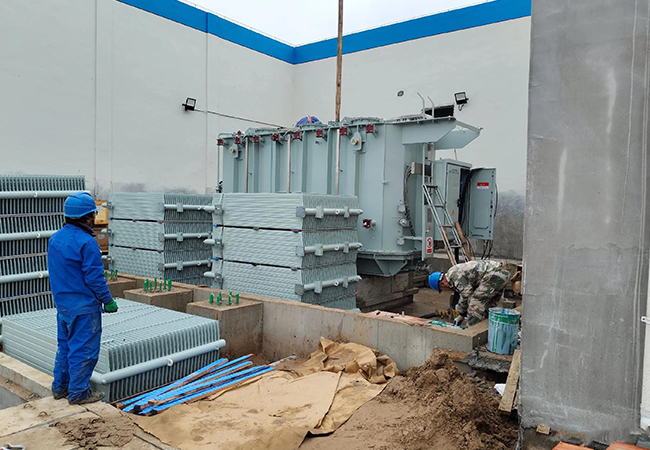
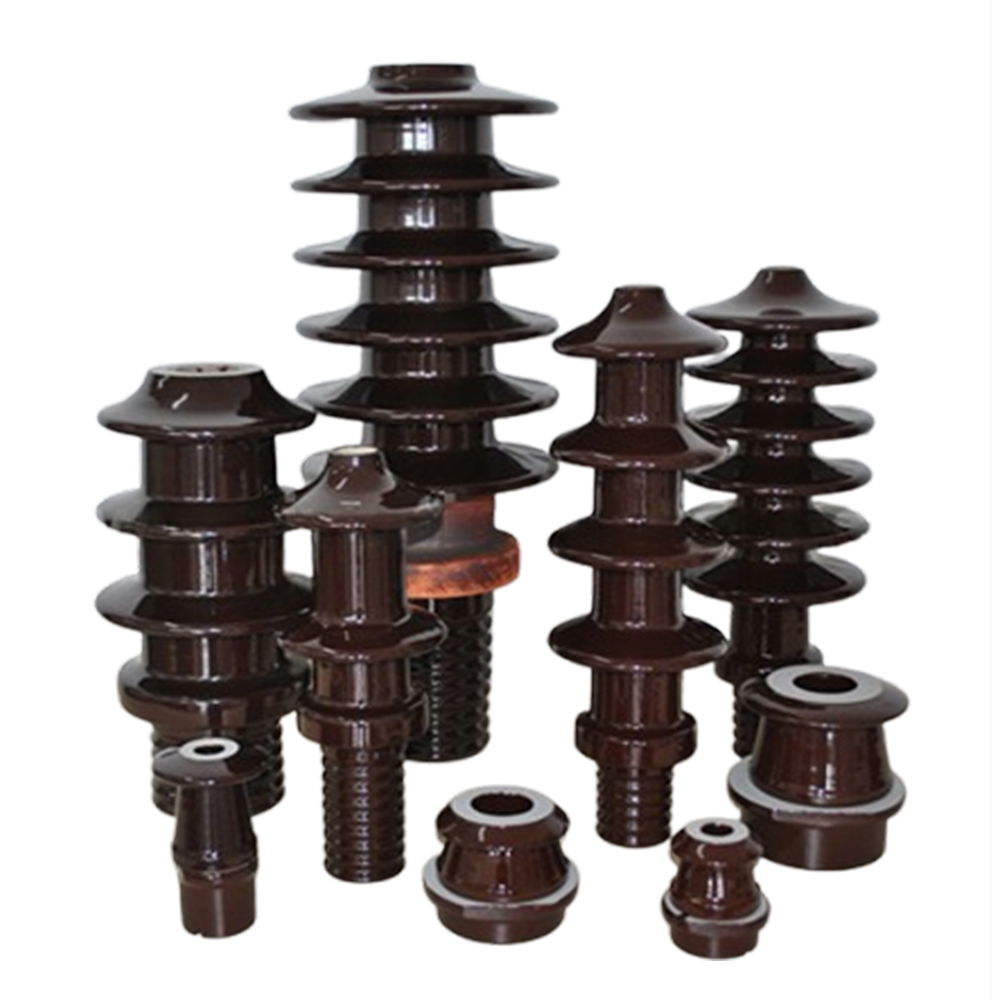
What Are Transformer Bushings?
A transformer bushing provides a controlled insulated path for live conductors through grounded metal, performing three core functions:
• Electrical insulation – prevents leakage between energized conductors and grounded parts
• Mechanical support – holds conductors rigid under mechanical forces
• Sealing – prevents moisture ingress and oil leakage
Bushings are used on both the high-voltage and low-voltage sides of transformers, and their reliability directly influences transformer safety and lifespan.
2. Types of Transformer Bushings
Transformer bushings are categorized by insulation type and voltage level:
Porcelain Bushings
-
Made of glazed ceramic
-
Good mechanical and dielectric strength
-
Up to ~245 kV
-
Excellent weathering resistance
-
Common in outdoor substations and distribution transformers
Resin-Impregnated Paper (RIP) Bushings
Oil-Impregnated Paper (OIP) Bushings
-
Paper insulation impregnated with transformer oil
-
Excellent dielectric and heat dissipation
-
Up to ~1200 kV
-
Proven long-term performance but requires oil monitoring
Polymer/Composite Bushings
-
Silicone rubber or epoxy composite insulation
-
Lightweight with hydrophobic surfaces
-
Good against contamination and tracking
-
Often used in coastal or polluted outdoor environments
3. Materials & Construction
Bushings are engineered from combinations of:
-
Core conductor – copper or aluminum for high conductivity
-
Insulating body – porcelain, silicone rubber, epoxy resin, or gas/oil systems
-
Capacitance grading layers – distribute electric fields uniformly
-
Seals & flange assemblies – ensure leak-proof mounting to transformer tanks
These elements work together to balance electrical and mechanical performance, reducing corona and partial discharges at high voltages.
4. Electrical & Mechanical Performance Parameters
Important performance specifications include:
| Parameter |
Typical Range / Property |
Purpose |
| Voltage Rating |
Up to 1,200 kV |
Determines insulation design |
| Dielectric Strength |
10–20 kV/mm |
Defines insulation breakdown resistance |
| Partial Discharge Inception Level |
<5 pC |
Ensures insulation integrity |
| Creepage Distance |
25–35 mm/kV |
Prevents surface flashover |
| Thermal Class |
Class A–H |
Determines heat resistance |
| Mechanical Load |
5–10 kN |
Resists wind and vibration stress |
Optimizing these measures ensures bushings endure decades under electrical, thermal, and environmental stress.
5. Testing & Quality Standards
Bushings must pass rigorous international tests, including:
Electrical Tests:
Mechanical Tests:
-
Cantilever load
-
Thermal cycling
-
Sealing & leakage
Relevant standards:
-
IEC 60137 – High-voltage bushings
-
IEEE C57.19 – Bushing design & performance
-
ANSI C29 – Insulator & bushing performance benchmarks
Zetwerk’s facilities comply with these standards, ensuring quality for utility and industrial applications.
6. Key Applications
Transformer bushings are vital in:
-
Power transformers (110–800 kV)
-
Distribution transformers
-
Switchgear & circuit breakers
-
Generators & reactors
-
Renewable energy step-up transformers
With renewable systems and harsher operating conditions, advanced insulation designs are increasingly important.