International Standards & Certifications for Dry Type Transformer Winding Coils
07-17 2026 | By:
When selecting a Dry Type Transformer Winding Coil, compliance with internationally recognized standards is just as important as the conductor material or insulation system. Standards define the requirements for electrical performance, insulation coordination, temperature rise, dielectric strength, short-circuit capability, and routine testing, helping ensure long-term reliability and safety.
For EPC contractors, utilities, industrial users, and transformer manufacturers, choosing winding coils designed and tested to international standards reduces project risks, simplifies acceptance, and improves compatibility with global specifications.
Why International Standards Matter
Transformer winding coils operate under continuous electrical, thermal, and mechanical stress. Poor design or inadequate testing can lead to:
- Premature insulation aging
- Partial discharge (PD)
- Local overheating
- Winding deformation during short circuits
- Unexpected power outages
- Increased maintenance costs
International standards establish uniform technical requirements that help manufacturers deliver consistent product quality while giving buyers confidence in long-term performance.
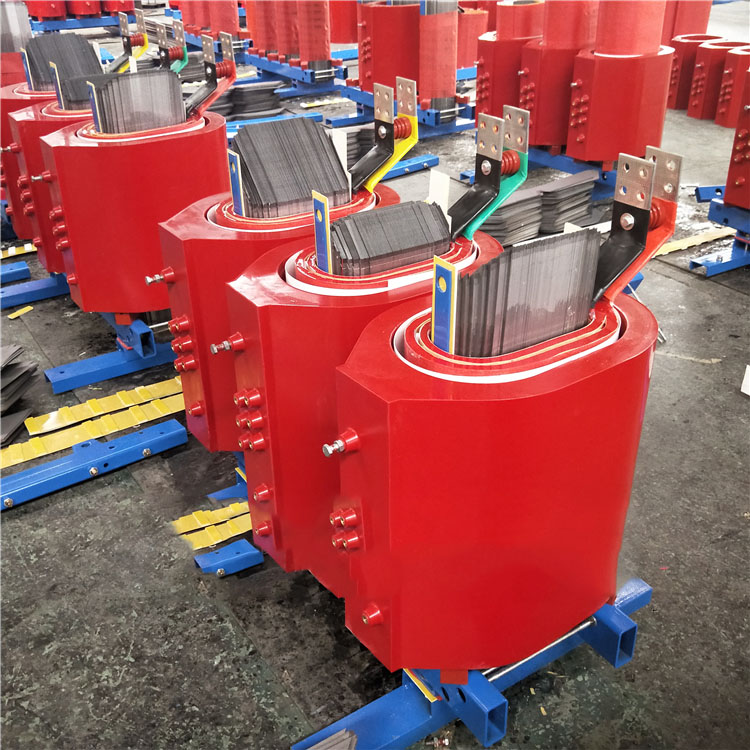
IEC 60076 Series — The Global Standard for Power Transformers
The IEC 60076 series, developed by the International Electrotechnical Commission (IEC), is the most widely adopted standard for power and distribution transformers worldwide. It provides design, testing, performance, and operational requirements for transformers used in utility, industrial, commercial, and renewable energy applications.
For dry-type transformer winding coils, the most relevant sections include:
| Standard | Scope | Relevance to Winding Coils |
|---|---|---|
| IEC 60076-1 | General Requirements | Defines ratings, insulation levels, temperature limits, and testing principles. |
| IEC 60076-2 | Temperature Rise | Specifies permissible temperature rise and cooling performance. |
| IEC 60076-3 | Insulation Levels & Dielectric Tests | Covers dielectric withstand capability, impulse tests, and insulation coordination. |
| IEC 60076-5 | Short-Circuit Withstand | Ensures windings can withstand mechanical forces during fault conditions. |
| IEC 60076-11 | Dry-Type Transformers | Defines insulation classes, environmental classifications, climatic conditions, fire behavior, and routine/type tests specific to dry-type transformers. |
For manufacturers supplying international projects, compliance with IEC 60076-11 is often a baseline requirement.
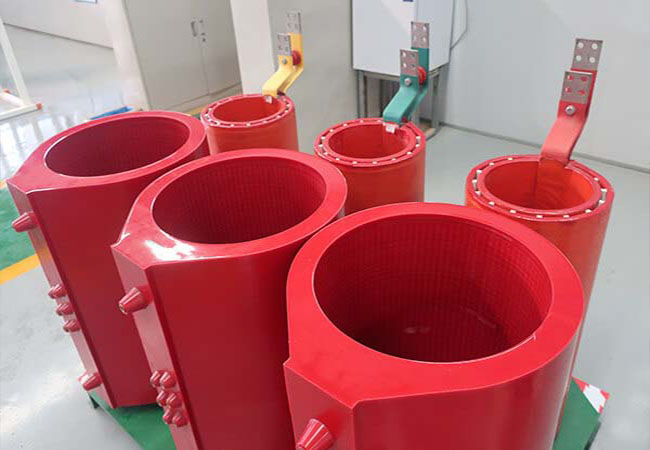
IEC 60076-11: The Core Standard for Dry-Type Transformers
IEC 60076-11 specifically addresses dry-type transformers and their winding systems. It focuses on the unique characteristics of air-insulated and resin-insulated transformers, including:
- Insulation system performance
- Thermal endurance
- Environmental classifications
- Climatic suitability
- Fire behavior
- Routine tests
- Type tests
- Special tests
Environmental Classification
IEC 60076-11 classifies transformers according to the environments in which they are designed to operate.
Typical classifications include:
- Indoor installations
- Humid environments
- Dusty industrial sites
- Coastal regions
- Polluted atmospheres
This helps engineers select winding insulation systems appropriate for the operating conditions.
Climatic Classification
Dry-type transformers may be installed in regions with widely varying temperatures.
The standard evaluates transformer performance under conditions such as:
- Low ambient temperatures
- High ambient temperatures
- High humidity
- Rapid temperature changes
Proper insulation and resin systems help prevent moisture ingress and maintain dielectric strength across these environments.
Fire Behaviour Classification
One of the key advantages of dry-type transformer winding coils is fire safety.
IEC 60076-11 evaluates:
- Flame propagation
- Smoke generation
- Toxic gas emissions
- Self-extinguishing characteristics
Vacuum-cast epoxy resin systems typically offer excellent fire performance, making them suitable for installations in buildings with stringent fire safety requirements.
IEEE Standards
While IEC standards dominate many international markets, IEEE standards are widely specified in North America and in projects following ANSI/IEEE design practices.
Relevant standards include:
| IEEE Standard | Description |
|---|---|
| IEEE C57.12.01 | General Requirements for Dry-Type Distribution and Power Transformers |
| IEEE C57.12.91 | Test Code for Dry-Type Transformers |
| IEEE C57.94 | Installation, Application, Operation, and Maintenance Guide |
These standards provide guidance on:
- Transformer design
- Testing procedures
- Operating limits
- Maintenance practices
- Performance evaluation
Manufacturers serving global markets often design products that can meet both IEC and IEEE requirements.
CE Marking
For transformers placed on the European market, compliance with applicable European regulations is important.
Although a transformer itself is not covered by a single “CE transformer standard,” CE marking demonstrates conformity with relevant EU directives where applicable, such as:
- Low Voltage Directive (LVD)
- Electromagnetic Compatibility (EMC), where relevant
- RoHS (Restriction of Hazardous Substances)
Project requirements should always be reviewed to determine which directives and documentation apply.
RoHS Compliance
RoHS compliance restricts the use of certain hazardous substances in electrical and electronic equipment.
RoHS-compliant transformer winding components typically avoid excessive levels of substances such as:
- Lead (Pb)
- Mercury (Hg)
- Cadmium (Cd)
- Hexavalent Chromium (Cr⁶⁺)
- PBB
- PBDE
Using compliant materials supports environmentally responsible manufacturing and may be required for certain export markets.
REACH Compliance
The EU REACH Regulation governs the registration and safe use of chemical substances.
For transformer winding coils, REACH compliance may involve evaluating:
- Epoxy resin formulations
- Adhesives
- Insulation materials
- Protective coatings
Providing REACH declarations can simplify procurement for customers operating in European markets.
ISO Quality Management Standards
International quality management systems help ensure consistency throughout the manufacturing process.
Common certifications include:
| Standard | Purpose |
|---|---|
| ISO 9001 | Quality Management System |
| ISO 14001 | Environmental Management System |
| ISO 45001 | Occupational Health & Safety Management |
A structured management system supports traceability, process control, and continual improvement.
Typical Routine Tests for Transformer Winding Coils
Routine tests verify that every manufactured winding meets the specified electrical and mechanical requirements before shipment.
Typical routine tests include:
Turns Ratio Test
Confirms that the winding ratio matches the design specification, ensuring the transformer will provide the correct output voltage.
Winding Resistance Test
Measures DC resistance to verify conductor integrity and detect issues such as poor joints or incorrect conductor dimensions.
Insulation Resistance Test
Evaluates the insulation system’s ability to resist leakage current under DC voltage.
Applied Voltage Test
Checks the insulation system’s capability to withstand the specified power-frequency voltage without breakdown.
Induced Voltage Test
Applies an increased voltage at a higher frequency to verify turn-to-turn insulation performance.
Partial Discharge Test
Partial discharge testing is one of the most important quality indicators for dry-type transformer winding coils.
A low partial discharge level generally indicates:
- High insulation quality
- Proper vacuum casting
- Minimal internal voids
- Reliable long-term operation
Many premium dry-type transformers are designed to achieve very low partial discharge levels under specified test conditions.
Type Tests
Type tests validate the design of a transformer series rather than every individual unit.
Typical type tests include:
- Temperature Rise Test
- Lightning Impulse Test (when applicable)
- Short-Circuit Withstand Verification
- Sound Level Measurement
- Degree of Protection Verification
These tests provide confidence that the transformer design meets its intended performance requirements.
Special Tests
Depending on project specifications, additional tests may be requested, including:
- Harmonic Performance Evaluation
- Seismic Qualification
- Salt Spray Resistance
- High-Humidity Endurance
- Vibration Testing
- Thermal Cycling
Such tests are common in applications like offshore platforms, rail transit, mining, and renewable energy projects.
How International Compliance Benefits Buyers
Choosing winding coils manufactured in accordance with recognized standards offers several advantages:
- Greater confidence in product quality
- Simplified project approval and acceptance
- Improved long-term reliability
- Better compatibility with international engineering specifications
- Reduced maintenance risks
- Support for global procurement and export projects
For utilities, EPC contractors, OEM transformer manufacturers, and industrial users, standards compliance is an important indicator of engineering quality and manufacturing capability.
You may also find these interesting: