Dry Type Transformer Winding Coils Types
07-17 2026 | By:
Selecting the appropriate winding coil is one of the most important decisions in dry-type transformer design. Different winding structures, conductor materials, and insulation technologies directly influence transformer efficiency, thermal performance, mechanical strength, service life, and maintenance requirements.
Modern dry-type transformers generally use one of four winding technologies depending on voltage class, power rating, and application environment.
1. Cast Resin Transformer Coil (CRT)
Best for:
- Medium Voltage Distribution
- Commercial Buildings
- Hospitals
- Airports
- Data Centers
- Renewable Energy Projects
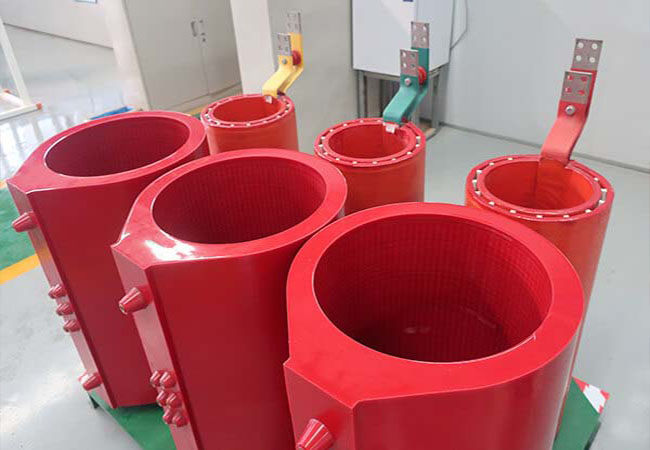
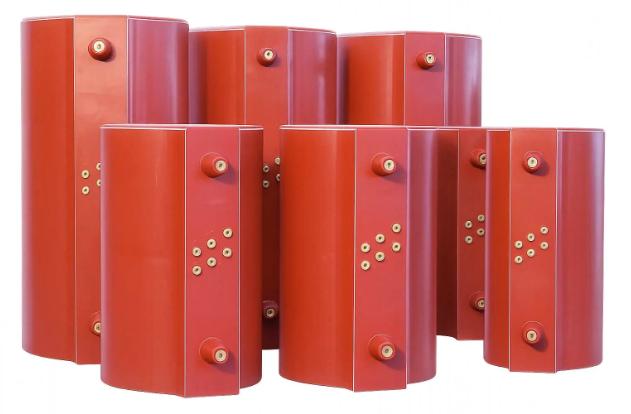
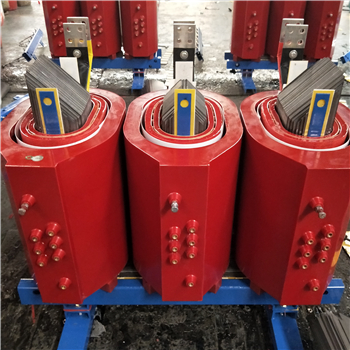
Cast Resin Transformer Coils are the most widely used winding type for modern dry-type transformers. During manufacturing, the high-voltage winding is vacuum-cast with epoxy resin, completely encapsulating the conductor and insulation system.
This process eliminates air voids and significantly improves dielectric strength while protecting the winding from moisture, dust, corrosive gases, and environmental contaminants.
Advantages
- Excellent moisture resistance
- High dielectric strength
- Fire-resistant and self-extinguishing
- Maintenance-free operation
- High mechanical strength
- Outstanding short-circuit withstand capability
- Long service life
Typical Voltage
- 6kV
- 10kV
- 11kV
- 13.8kV
- 20kV
- 35kV
2. Vacuum Pressure Impregnated (VPI) Coil
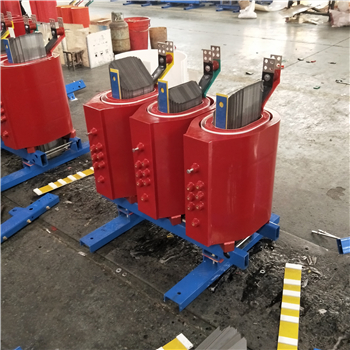
Instead of casting epoxy around the winding, VPI technology immerses the completed winding into insulating varnish under vacuum and pressure.
After impregnation, the winding is baked at high temperature until the insulation cures.
VPI coils are lighter than cast resin coils and provide excellent cooling performance.
Advantages
- Lower manufacturing cost
- Better heat dissipation
- Lightweight structure
- Easy repair
- High efficiency
Limitations
Compared with epoxy cast coils, VPI windings provide lower resistance to moisture and contamination.
For harsh environments, cast resin technology remains the preferred solution.
3. Copper Foil Winding Coil
Copper foil winding technology is commonly applied to low-voltage windings.
Instead of round conductors, wide copper foil is wound layer by layer with insulation material.
Benefits
- Uniform current distribution
- Reduced eddy current losses
- Lower temperature rise
- Excellent short-circuit strength
- Compact winding structure
Copper foil windings are commonly used in transformers above 630 kVA.
4. Aluminum Foil Winding Coil
Aluminum foil winding follows the same manufacturing principle as copper foil but uses aluminum conductors.
Its primary advantage is weight reduction and cost savings.
Today, aluminum coils are widely used in commercial distribution transformers where cost optimization is important.
Coil Selection Guide
| Coil Type | Insulation | Voltage | Moisture Resistance | Maintenance | Typical Applications |
|---|---|---|---|---|---|
| Cast Resin | Epoxy Resin | Up to 35kV | Excellent | Very Low | Hospitals, Data Centers, Solar Plants |
| VPI Coil | Polyester Resin | Up to 15kV | Good | Low | Industrial Buildings |
| Copper Foil | Epoxy + DMD | Low Voltage | Excellent | Very Low | Large Capacity Transformers |
| Aluminum Foil | Epoxy + DMD | Low Voltage | Good | Low | Commercial Buildings |
Dry Type Transformer Winding Coil Manufacturing Process
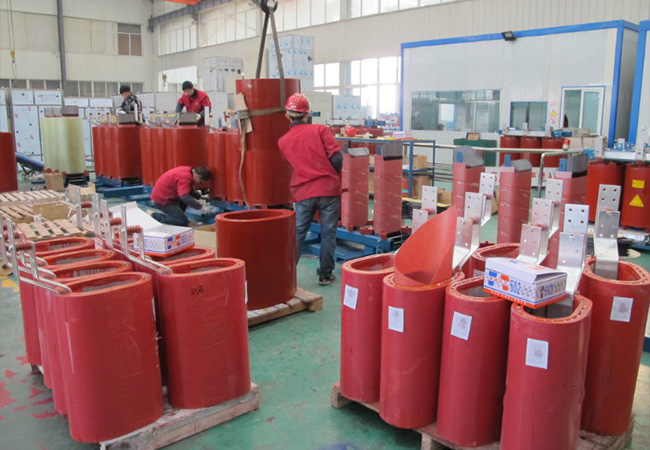
The manufacturing process determines the electrical performance, mechanical strength, dielectric reliability, and service life of the transformer.
Professional manufacturers strictly follow IEC 60076-11 and ISO quality management standards during every production stage.
Step 1 — Raw Material Inspection
Every production cycle begins with incoming material inspection.
Critical materials include:
- Electrolytic Copper
- Electrical Aluminum
- Epoxy Resin
- Glass Fiber
- Nomex® Paper
- DMD Insulation
- Silicon Steel Core Components
Each material undergoes:
- Dimension inspection
- Conductivity testing
- Insulation verification
- Moisture measurement
Step 2 — Coil Winding
Computer-controlled CNC winding machines ensure:
- Accurate turns ratio
- Uniform conductor tension
- Stable winding geometry
- Consistent insulation spacing
The winding accuracy directly affects transformer efficiency and voltage regulation.
Step 3 — Layer Insulation
Each conductor layer is separated using high-temperature insulation materials.
Common insulation systems include:
- Nomex®
- DMD
- Epoxy Glass Cloth
- Polyester Film
- Glass Fiber Mesh
The insulation system prevents turn-to-turn breakdown under high voltage stress.
Step 4 — Vacuum Drying
Before resin casting, coils are dried inside a vacuum chamber.
Purpose:
- Remove moisture
- Remove trapped air
- Improve resin penetration
Vacuum drying significantly reduces the possibility of partial discharge during transformer operation.
Step 5 — Vacuum Epoxy Casting
This is the most critical manufacturing stage.
The winding is placed into a mold.
High-quality epoxy resin is introduced under:
- High Vacuum
- Controlled Temperature
- Controlled Pressure
The resin completely fills every insulation gap.
After curing, the coil becomes a solid insulation system.
Step 6 — Oven Curing
The cast coil enters a temperature-controlled curing oven.
Typical curing temperature:
120–160°C
Purpose:
- Complete resin polymerization
- Increase mechanical strength
- Improve thermal endurance
Step 7 — Machining & Finishing
After curing:
- Flash removal
- Surface polishing
- Terminal machining
- Dimensional inspection
are completed.
Step 8 — Electrical Testing
Each finished winding undergoes comprehensive testing.
Including:
- Partial Discharge Test
- Power Frequency Withstand Voltage Test
- Induced Voltage Test
- Turns Ratio Test
- DC Resistance Test
- Insulation Resistance Test
Only qualified products proceed to transformer assembly.
Copper Transformer Coil vs Aluminum Transformer Coil
One of the most common questions from engineers and buyers is whether copper or aluminum conductors should be selected.
The answer depends on electrical performance, budget, installation conditions, and lifecycle cost.
Copper Transformer Coil
Copper has been the preferred conductor material for decades due to its excellent electrical conductivity and mechanical strength.
Advantages
- Higher conductivity
- Lower resistance
- Smaller conductor size
- Higher short-circuit strength
- Better overload capability
- Longer service life
Typical Applications
- Data Centers
- Hospitals
- Mining
- Petrochemical Plants
- Railway Systems
- Critical Infrastructure
Aluminum Transformer Coil
Aluminum offers an economical alternative for standard commercial applications.
Advantages
- Lower material cost
- Lightweight
- Easy transportation
- Lower total transformer weight
Considerations
Because aluminum has lower conductivity than copper, a larger conductor cross-section is required to carry the same current. Proper connection design is also important to minimize long-term contact resistance.
Copper vs Aluminum Comparison
| Item | Copper Coil | Aluminum Coil |
|---|---|---|
| Electrical Conductivity | Excellent | Good |
| Mechanical Strength | Excellent | Moderate |
| Weight | Heavy | Light |
| Cost | Higher | Lower |
| Efficiency | Higher | Good |
| Short-Circuit Performance | Excellent | Good |
| Service Life | Longer | Long |
| Maintenance | Low | Low |
| Recommended Applications | Critical Power Systems | Commercial Distribution |
Selection Tip:
For mission-critical facilities such as hospitals, data centers, rail transit, and industrial plants where reliability and overload capability are priorities, copper windings are generally preferred. Aluminum windings remain a practical choice for many commercial distribution projects where reducing initial investment is an important consideration.
Cast Resin Coil vs VPI Coil
Both Cast Resin and Vacuum Pressure Impregnated (VPI) technologies are widely used in dry-type transformers.
Choosing the correct insulation technology depends on operating environment, maintenance strategy, and project requirements.
| Feature | Cast Resin Coil | VPI Coil |
|---|---|---|
| Manufacturing | Vacuum Epoxy Casting | Vacuum Pressure Impregnation |
| Moisture Resistance | Excellent | Good |
| Fire Performance | Excellent | Good |
| Mechanical Strength | Excellent | Good |
| Maintenance | Minimal | Low |
| Environmental Protection | Excellent | Good |
| Partial Discharge Performance | Excellent | Good |
| Indoor Applications | Excellent | Excellent |
| Harsh Environments | Highly Recommended | Suitable for Moderate Conditions |
| Initial Cost | Higher | Lower |
Which Technology Should You Choose?
Cast Resin Coils are well suited for environments requiring maximum reliability, fire safety, and resistance to humidity or pollution, such as hospitals, metro systems, data centers, renewable energy facilities, and high-rise buildings.
VPI Coils are often selected for industrial and commercial applications where operating conditions are less demanding and a lower initial cost is preferred.
You may also find these interesting: