Electric Furnace Transformer: Design, Specifications and Industrial Applications
11-05 2026 | By:
1. What Is an Electric Furnace Transformer?
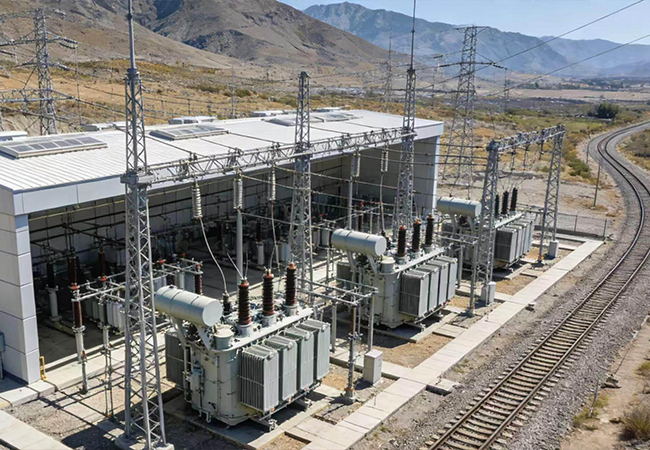
An electric furnace transformer is a specially designed power transformer used to supply electrical energy to industrial furnaces. It converts high-voltage electrical power from the grid into the low-voltage, high-current power required by furnace heating and melting processes.
Unlike conventional distribution or power transformers, electric furnace transformers operate under demanding electrical and thermal conditions. They are often exposed to frequent load fluctuations, high short-circuit currents, harmonic disturbances and repeated operating cycles.
Electric furnace transformers are widely used in steelmaking, ferroalloy production, non-ferrous metal smelting, foundries and other energy-intensive industries.
For steel plants and metallurgical projects, the transformer is a critical part of the furnace power supply system. Its electrical performance directly affects melting efficiency, production stability, energy consumption and equipment service life.
ZTELEC YUGUANG provides power transformer and special transformer solutions for industrial power applications, including customized designs based on project voltage levels, furnace types, operating conditions and technical requirements.
2. Main Types of Electric Furnace Transformers
Electric furnace transformers can be classified according to furnace technology, production process and electrical operating requirements. Different furnace types require different transformer designs, voltage regulation methods and cooling arrangements.
2.1 Electric Arc Furnace Transformer (EAF Transformer)
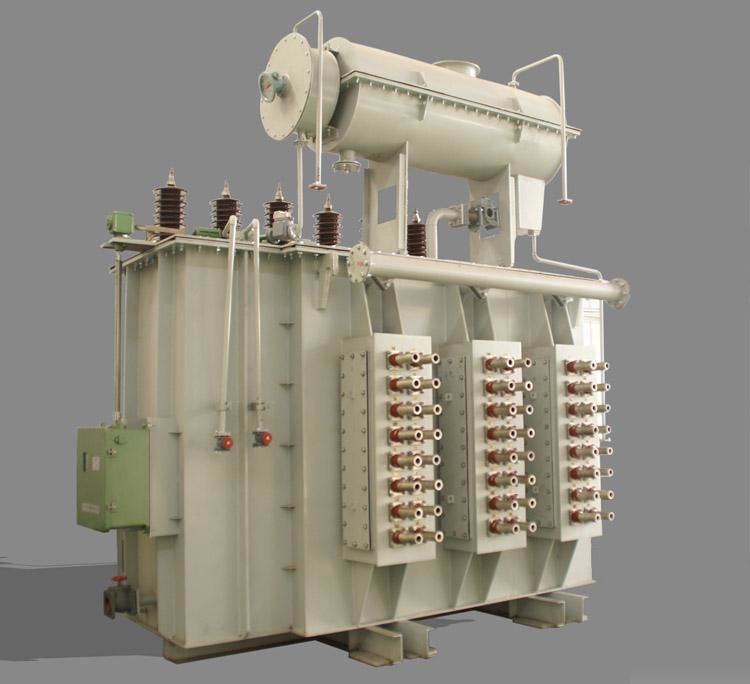
An electric arc furnace transformer supplies electrical power to electric arc furnaces used for melting scrap steel, direct reduced iron (DRI) and other metallic materials.
It is designed to withstand heavy-duty operating conditions, including frequent load changes, high currents and electrical disturbances caused by the electric arc.
Typical characteristics include:
-
High-current, low-voltage secondary output.
-
High mechanical strength to withstand electromagnetic forces.
-
Robust insulation and thermal design.
-
Wide voltage regulation range to support different melting stages.
-
High short-circuit withstand capability.
-
Suitable cooling systems for continuous or cyclic heavy-duty operation.
Typical applications:
-
Steelmaking plants.
-
Scrap steel melting facilities.
-
Mini-mills.
-
Electric arc furnace steel production lines.
2.2 Ladle Furnace Transformer (LF Transformer)
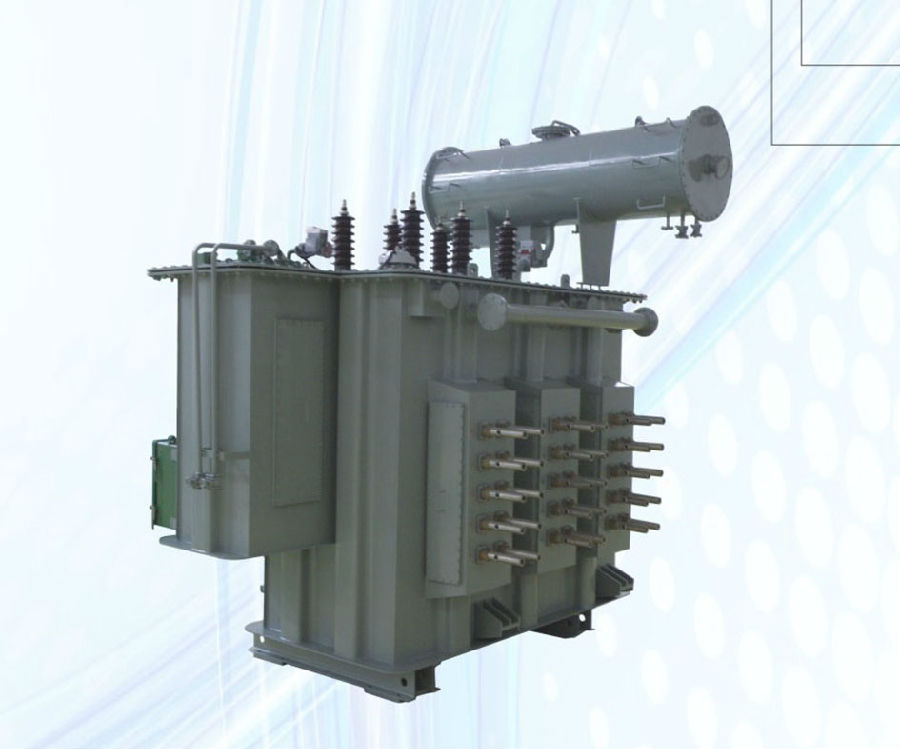
A ladle furnace transformer is used in secondary steelmaking to provide electrical energy for heating molten steel in a ladle.
Compared with an EAF transformer, a ladle furnace transformer generally operates with a different load profile and process requirement. It must provide stable power during refining, temperature adjustment and alloying processes.
Key features include:
-
Stable secondary voltage output.
-
High-current supply for graphite electrodes.
-
Fine voltage regulation.
-
Reliable performance under frequent load variations.
-
Thermal design suitable for repeated heating cycles.
Typical applications:
-
Secondary steelmaking.
-
Ladle refining furnaces.
-
Steel temperature adjustment.
-
Alloying and refining processes.
2.3 Submerged Arc Furnace Transformer (SAF Transformer)
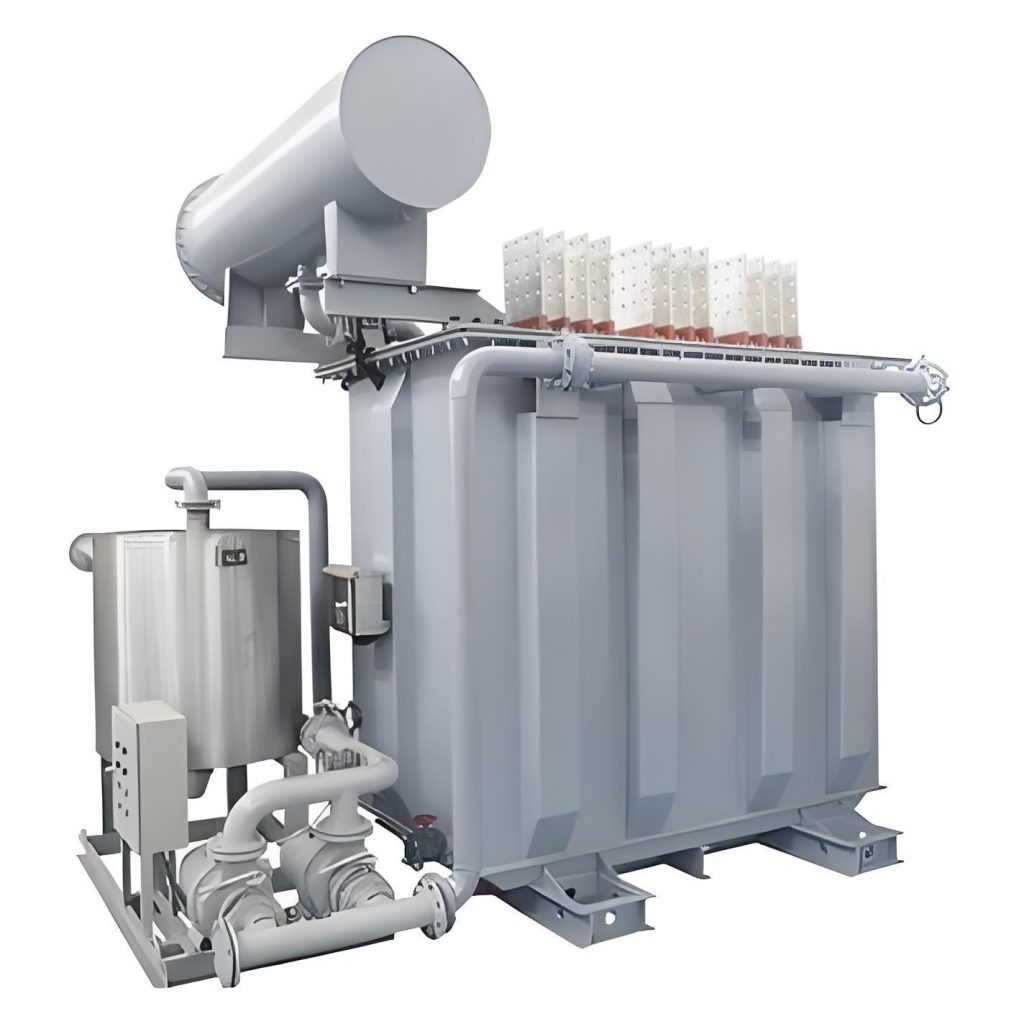
A submerged arc furnace transformer supplies power to submerged arc furnaces used for producing ferroalloys, silicon metal, calcium carbide and other metallurgical materials.
These transformers are designed for high-current operation and long production cycles. Depending on the furnace process, the secondary voltage and current requirements may vary significantly.
Key design considerations include:
-
High-current secondary windings.
-
Low-voltage, high-current output.
-
Strong short-circuit resistance.
-
Suitable cooling and thermal management.
-
Flexible voltage regulation.
-
Reliable operation under demanding industrial conditions.
Typical applications:
-
Ferrosilicon production.
-
Ferromanganese and ferrochrome production.
-
Silicon metal smelting.
-
Calcium carbide production.
2.4 Induction Furnace Transformer
An induction furnace transformer is used in induction melting systems to supply electrical power to induction heating equipment.
Its design must consider the electrical characteristics of the induction power supply, including rectifier or inverter configuration, harmonic content and load variation.
Depending on the system architecture, the transformer may be integrated with a rectifier, converter or other power electronic equipment.
Typical applications:
-
Steel and iron foundries.
-
Copper and aluminum melting.
-
Non-ferrous metal processing.
-
Precision metal casting.
2.5 Other Special Furnace Transformers
In addition to the major types above, industrial furnace transformer solutions can include transformers for resistance furnaces, graphite electrode production, mineral processing and other specialized heating applications.
The final configuration should be determined by the furnace technology, electrical system and production process rather than by capacity alone.
3. Electric Furnace Transformer Design and Key Components
Electric furnace transformers are engineered according to the electrical characteristics of the furnace and the requirements of the production process. Their design is more specialized than that of standard power transformers.
3.1 Core and Winding Design
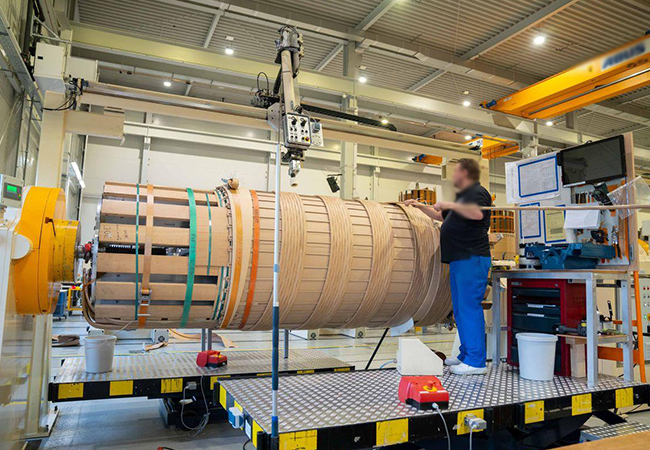
The transformer core provides the magnetic circuit for energy conversion. Core materials, magnetic flux density and structural design must be selected to achieve reliable operation and control losses.
The windings require particular attention because furnace transformers operate with high secondary currents and demanding thermal and mechanical conditions.
Important design considerations include:
-
Winding conductor cross-section and current density.
-
Insulation structure and dielectric strength.
-
Mechanical clamping and winding support.
-
Resistance to electromagnetic forces during short circuits.
-
Temperature distribution and hot-spot control.
3.2 Voltage Regulation and Tap Changer
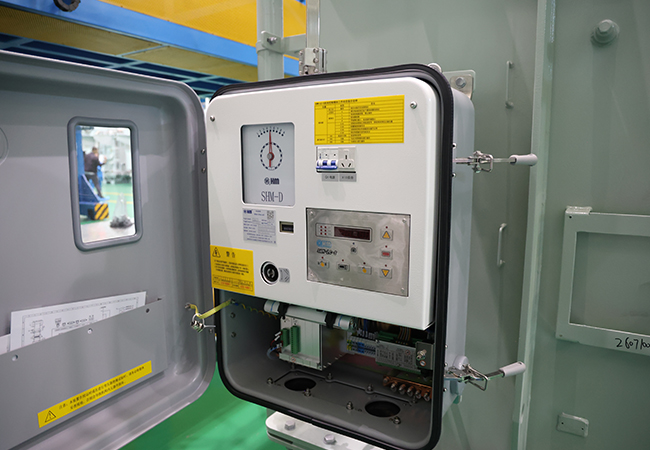
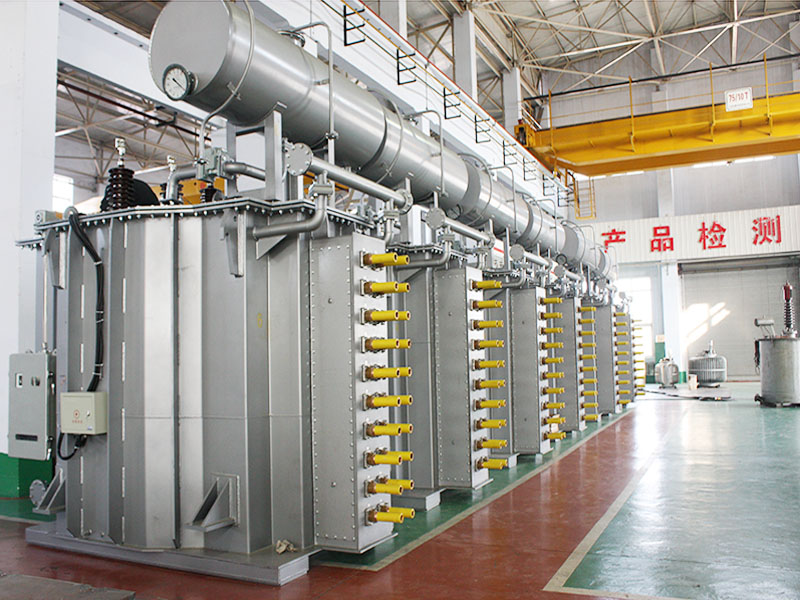
Voltage regulation allows the transformer to provide different secondary voltage levels according to furnace operating conditions.
Common configurations include:
-
On-load tap changer (OLTC): Allows voltage adjustment while the transformer is energized and supplying the furnace, where the design and operating scheme permit.
-
Off-circuit tap changer (DETC/NLTC): Requires the transformer to be de-energized before changing the tap position.
-
Separate phase regulation: May be adopted in certain electric arc furnace designs to address phase load asymmetry.
The required regulation range, number of tap positions and switching arrangement should be determined by the furnace process and the electrical system.
3.3 Cooling System
High current and fluctuating furnace loads generate considerable heat in transformer windings, the core and other components. The cooling system must therefore be designed according to the rated capacity, duty cycle, ambient temperature and installation conditions.
Common cooling arrangements include:
| Cooling method | Description | Typical application |
|---|---|---|
| ONAN | Oil Natural Air Natural | Smaller or less demanding furnace transformer designs |
| ONAF | Oil Natural Air Forced | Higher cooling demand with forced-air radiators |
| OFAF | Oil Forced Air Forced | Heavy-duty applications requiring enhanced heat dissipation |
| OFWF | Oil Forced Water Forced | Large-capacity installations with suitable water-cooling infrastructure |
The final cooling arrangement should be confirmed through thermal calculations and project specifications.
3.4 High-Current Secondary Terminals
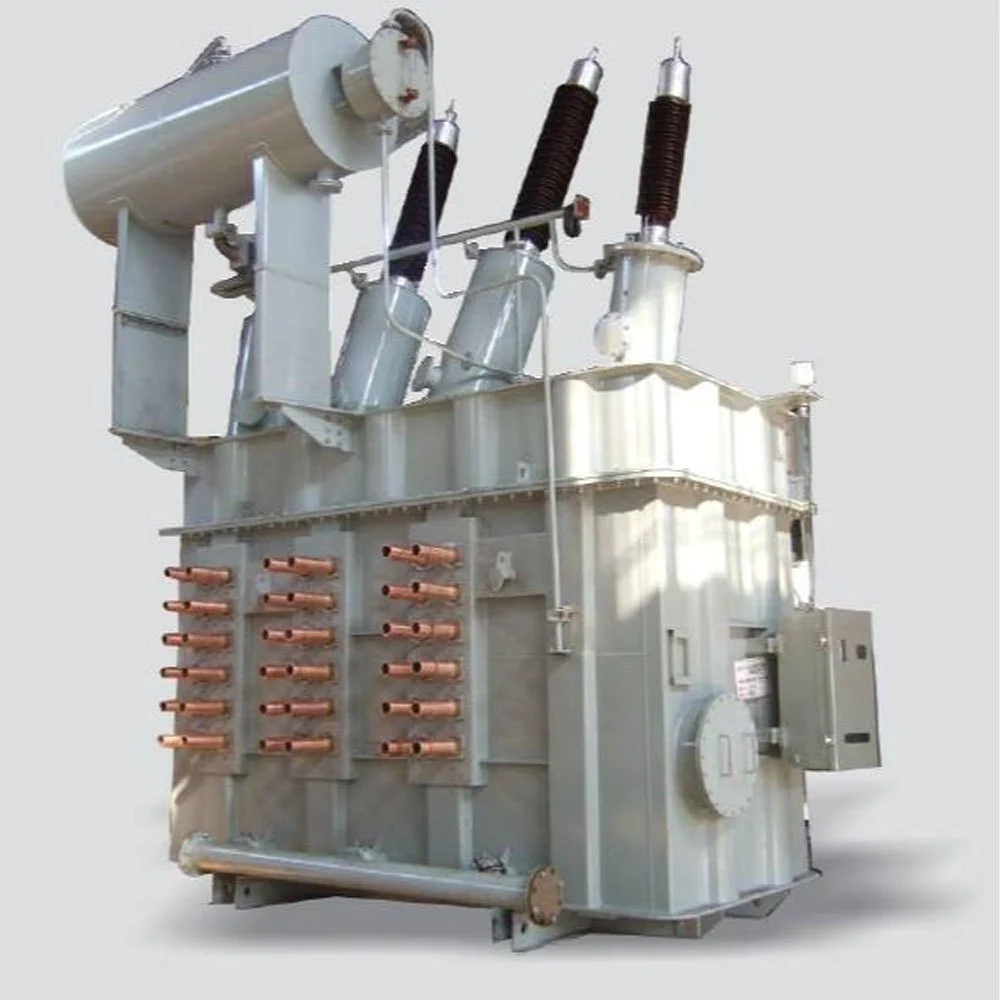
The low-voltage side of a furnace transformer may carry extremely high current. Therefore, the secondary terminals and connection system require special engineering.
Depending on the current rating and installation layout, the design may use:
-
High-current copper bar bushings.
-
Multiple parallel secondary connections.
-
Water-cooled tubular connections.
-
Special terminal arrangements through the tank wall or cover.
-
Reinforced mechanical support and sealing structures.
These components help manage current density, connection losses and thermal stress.
3.5 Impedance and Short-Circuit Withstand
Transformer impedance is an important parameter in furnace power supply systems. It influences short-circuit current, arc stability and the electrical characteristics of the furnace circuit.
The transformer must also be mechanically designed to withstand electromagnetic forces associated with high-current operation and repeated short-circuit events.
For electric arc furnace applications, the transformer, series reactor (if required), furnace breaker and secondary circuit should be considered as one coordinated electrical system.
4. Electric Furnace Transformer Specifications
The technical specifications of an electric furnace transformer vary according to furnace capacity, process technology, grid conditions and operating requirements.
The following table summarizes the main parameters that should be considered when preparing a technical specification or requesting a quotation.
4.2 Illustrative Technical Specification Example
The following is a reference format, not a guaranteed ZTELEC YUGUANG product rating. Actual values must be confirmed against the furnace manufacturer’s data and the project’s electrical design.
| Item | Example specification |
|---|---|
| Product | Three-phase electric arc furnace transformer |
| Rated capacity | To be determined by furnace load calculation |
| Primary voltage | 33 kV |
| Secondary voltage | Multiple low-voltage taps, project-specific |
| Frequency | 50 Hz |
| Voltage regulation | OLTC, subject to operating requirements |
| Cooling | OFAF or OFWF, subject to thermal design |
| Impedance | Project-specific |
| Insulation | Oil-immersed |
| Installation | Outdoor |
| Standard | IEC 60076 series, as specified |
For a real quotation, the manufacturer should receive the complete voltage tap table, rated secondary current, impedance requirements, cooling conditions and furnace operating cycle. A transformer cannot be accurately selected by MVA rating alone.
5. Industrial Applications of Electric Furnace Transformers
Electric furnace transformers are used in a wide range of industries where high-power electrical heating, melting or refining is required.
5.1 Steelmaking and Scrap Steel Recycling
Electric arc furnace transformers provide the power required to melt scrap steel and produce liquid steel. They are a key component in modern steelmaking plants and scrap recycling facilities.
Typical equipment includes:
-
Electric arc furnace transformers.
-
Ladle furnace transformers.
-
Furnace reactors and high-current connection systems.
5.2 Ferroalloy and Silicon Metal Production
Submerged arc furnace transformers are widely used in ferroalloy production and silicon metal smelting. They supply the high-current electrical energy needed for continuous or long-cycle smelting operations.
Typical products include:
-
Ferrosilicon furnace transformers.
-
Ferromanganese furnace transformers.
-
Ferrochrome furnace transformers.
-
Silicon metal furnace transformers.
5.3 Foundries and Non-Ferrous Metal Processing
Induction and resistance furnace transformers support metal melting, casting and heat-treatment processes.
They are used in:
-
Iron and steel foundries.
-
Aluminum melting plants.
-
Copper smelting and processing.
-
Metal heat-treatment facilities.
5.4 Electroslag Remelting and Special Metallurgy
Electroslag furnace transformers are used in specialized metallurgical processes that require controlled electrical heating and stable operating conditions.
Applications include:
-
Electroslag remelting (ESR).
-
Production of high-quality alloy steel.
-
Special steel manufacturing.
-
Advanced metallurgical processing.
6. How to Select the Right Electric Furnace Transformer
Selecting an electric furnace transformer requires coordination between the transformer manufacturer, furnace supplier and electrical system designer. The following factors should be evaluated before confirming the transformer specification.
6.1 Identify the Furnace Type
The first step is to determine the exact furnace technology.
| Furnace type | Recommended transformer category | Main design focus |
|---|---|---|
| Electric arc furnace | EAF transformer | High current, arc stability and voltage regulation |
| Ladle refining furnace | LF transformer | Stable power supply and precise voltage adjustment |
| Submerged arc furnace | SAF transformer | Continuous heavy-duty operation and high current |
| Induction furnace | Induction furnace transformer | Power supply compatibility and harmonic conditions |
| Electroslag remelting furnace | Electroslag furnace transformer | Controlled heating and stable electrical performance |
| Resistance furnace | Resistance furnace transformer | Heating power and temperature control requirements |
Choosing the correct transformer category is essential because different furnace processes have different load characteristics and electrical requirements.
6.2 Confirm the Required Transformer Capacity
Transformer capacity should be calculated according to the actual furnace power demand rather than selected only by furnace tonnage.
The following information is important:
-
Furnace rated power.
-
Furnace capacity and production output.
-
Melting or heating cycle.
-
Operating hours per day.
-
Peak load and overload requirements.
-
Expected power factor.
-
Required production efficiency.
For an electric arc furnace, the transformer rating should be coordinated with the melting process, operating cycle and maximum secondary current.
6.3 Determine Primary and Secondary Voltage
The primary voltage must match the plant’s electrical supply system.
The secondary voltage should be determined according to the furnace operating requirements, electrode configuration and required current.
For furnace transformers, the secondary current is particularly important because it affects winding conductor size, terminal design, cooling and connection arrangements.
6.4 Select the Voltage Regulation Method
Different furnace processes require different voltage regulation arrangements.
Consider the following:
-
Required secondary voltage range.
-
Number of voltage steps.
-
Voltage adjustment frequency.
-
Whether regulation is required under load.
-
Whether separate phase regulation is necessary.
-
Coordination with furnace control equipment.
An appropriate tap changer configuration helps the furnace operate under different production stages.
6.5 Evaluate Cooling and Operating Conditions
The cooling system should be selected according to transformer losses, operating cycle, ambient temperature and available cooling infrastructure.
For projects in hot climates, high-altitude locations or dusty industrial environments, the manufacturer should also evaluate the actual site conditions when designing the cooling and protection systems.
6.6 Confirm Standards and Testing Requirements
Before placing an order, confirm the applicable standards and inspection requirements.
Relevant standards may include:
-
IEC 60076 series: Power transformers.
-
IEC 60076-5: Ability to withstand short circuit.
-
IEC 60076-2: Temperature rise for liquid-immersed transformers.
-
IEC 60676: Test methods for industrial direct arc furnaces.
The applicable editions, scope and acceptance criteria should be confirmed in the project contract. IEC 60676 specifically addresses testing of industrial direct arc furnaces, while transformer requirements need to be considered under the relevant transformer standards.
7. Why Choose ZTELEC YUGUANG for Electric Furnace Transformers?
ZTELEC YUGUANG focuses on power transformers and special-purpose transformers for industrial power supply applications.
Electric furnace transformer projects often involve complex electrical requirements. A reliable manufacturing partner should be able to understand the furnace process, evaluate the electrical operating conditions and develop a transformer design that meets the project’s technical specifications.
7.1 Customized Transformer Design
ZTELEC YUGUANG can develop electric furnace transformer solutions according to project requirements, including:
-
Electric arc furnace transformers.
-
Ladle refining furnace transformers.
-
Electroslag furnace transformers.
-
Power-frequency furnace transformers.
-
Other customized industrial special transformers.
Transformer configuration, voltage regulation and cooling arrangements should be determined according to the customer’s technical specification.
7.2 Engineering for Different Operating Conditions
Each furnace application has its own electrical and thermal requirements.
The engineering design should consider:
-
Rated capacity and operating cycle.
-
Primary and secondary voltage.
-
Maximum secondary current.
-
Short-circuit impedance.
-
Voltage regulation range.
-
Winding insulation and mechanical strength.
-
Cooling system and temperature-rise requirements.
7.3 Manufacturing and Quality Control
Transformer manufacturing quality has a direct impact on long-term operational reliability.
Key manufacturing and inspection processes may include:
-
Core cutting and stacking.
-
Winding manufacturing and assembly.
-
Insulation system assembly.
-
Transformer tank fabrication.
-
Vacuum drying and oil filling.
-
Electrical testing and final inspection.
The final inspection and testing plan should be agreed upon according to the transformer design, applicable standards and project requirements.
7.4 Solutions for Industrial Power Projects
In addition to electric furnace transformers, ZTELEC YUGUANG’s product portfolio includes:
-
High-voltage power transformers.
-
Oil-immersed distribution transformers.
-
Dry-type transformers.
-
Rectifier transformers.
-
Traction transformers.
-
Compact and prefabricated substations.
This product range supports different industrial power distribution and special power supply requirements.
Looking for a customized electric furnace transformer for your steel plant or metallurgical project?
Contact ZTELEC YUGUANG with your furnace specifications and electrical system requirements. Our team can review the project information and provide a suitable transformer proposal.
Request a Technical Proposal
8. Information Required for an Electric Furnace Transformer Quotation
To help the manufacturer prepare an accurate technical proposal and quotation, buyers should provide the following information.
| Required information | Details to provide |
|---|---|
| Furnace type | EAF / LF / SAF / Induction / Electroslag / Resistance |
| Furnace manufacturer | Manufacturer and model |
| Rated furnace capacity | Tonnes or production capacity |
| Transformer rated capacity | MVA, if already specified |
| Primary voltage | kV |
| Secondary voltage | V, including required tap range |
| Secondary current | A or kA |
| Frequency | 50 Hz or 60 Hz |
| Number of phases | Single-phase or three-phase |
| Voltage regulation | OLTC / DETC / Other |
| Impedance | Required percentage or project specification |
| Cooling method | ONAN / ONAF / OFAF / OFWF |
| Installation location | Indoor or outdoor |
| Applicable standard | IEC or other specified standard |
| Special requirements | Ambient temperature, altitude, overload, harmonic conditions and other site requirements |
If the transformer is being supplied as part of a new furnace installation, it is also helpful to provide the furnace single-line diagram, electrical load data and technical documentation from the furnace supplier.
9. Frequently Asked Questions About Electric Furnace Transformers
Q1. What is the difference between an electric furnace transformer and a standard power transformer?
An electric furnace transformer is specially designed for demanding industrial furnace loads. Compared with a standard power transformer, it may require a wider secondary voltage regulation range, higher secondary current, enhanced mechanical strength and specialized cooling arrangements.
Q2. What are the main types of electric furnace transformers?
The main types include electric arc furnace transformers, ladle furnace transformers, submerged arc furnace transformers, induction furnace transformers, electroslag furnace transformers and resistance furnace transformers.
Each type is designed for a different heating or metallurgical process.
Q3. What is the typical secondary voltage of an electric furnace transformer?
There is no single standard secondary voltage for all furnace transformers. It depends on the furnace type, rated power, electrode arrangement and operating requirements. The voltage range should be confirmed with the furnace manufacturer.
Q4. Why does an electric furnace transformer require a special tap changer?
Furnace operating conditions change during melting, refining and heating processes. A suitable tap changer provides different secondary voltage levels to match these operating stages. The regulation method and switching capability must be selected according to the specific application.
Q5. Can an electric furnace transformer be customized?
Yes. Electric furnace transformers are generally designed according to project-specific requirements. Capacity, primary voltage, secondary voltage, current, impedance, cooling method, voltage regulation and terminal arrangements can be specified according to the furnace system.
Q6. What information is needed to select an electric furnace transformer?
The key information includes furnace type, rated power, primary voltage, secondary voltage, maximum current, operating cycle, voltage regulation requirements, impedance, cooling method and applicable technical standards.
10. Conclusion
An electric furnace transformer is a critical component in industrial melting, refining and metallurgical production systems. Its design must account for high secondary current, fluctuating loads, voltage regulation, thermal performance and short-circuit withstand capability.
Whether the project requires an electric arc furnace transformer, ladle furnace transformer, submerged arc furnace transformer or another special furnace transformer, the correct solution should be developed according to the actual furnace process and electrical system.
ZTELEC YUGUANG provides customized transformer solutions for industrial power applications, supporting customers with project-based technical specifications and manufacturing requirements.
Contact ZTELEC YUGUANG to discuss your electric furnace transformer project.
You may also find these interesting: