Best Prefabricated Substation Manufacturer for Solar & Industrial Projects
05-25 2026 | By:
As utility-scale renewable energy and industrial electrification projects continue to expand worldwide, the demand for turnkey prefabricated substations is growing rapidly among EPC contractors, utility companies, solar developers, and industrial plant operators.
Modern power infrastructure projects require more than just transformers and switchgear. Today’s project owners focus on:
- Fast deployment
- Reduced civil construction cost
- IEC/IEEE compliance
- High environmental adaptability
- Complete primary & secondary system integration
- Remote monitoring and SCADA compatibility
- Flexible modular design for solar and industrial applications
For this reason, prefabricated substations have become the preferred solution for modern modular power distribution systems.
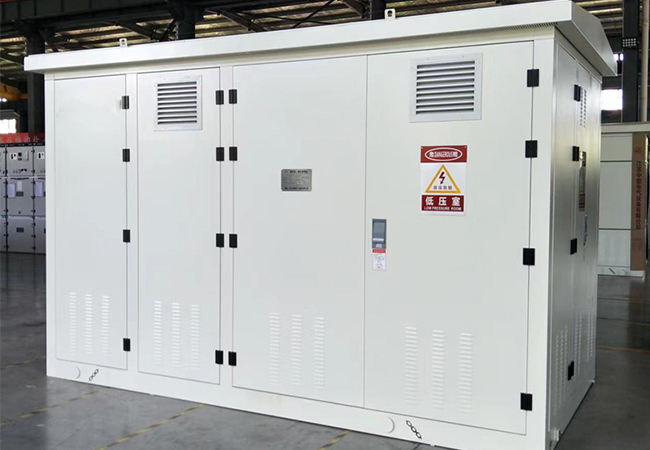
Combined Prefabricated Substation
What Is a Turnkey Prefabricated Substation?
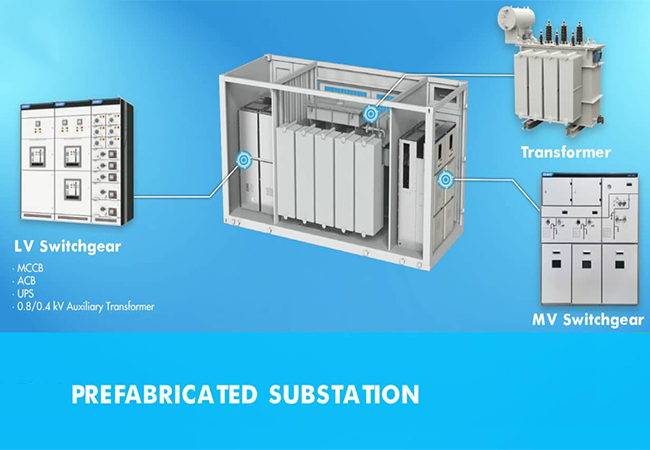
A prefabricated substation is a factory-assembled integrated power distribution system that combines:
- MV switchgear
- Power transformers
- LV distribution panels
- Protection relays
- EMS/SCADA systems
- Communication systems
- HVAC & ventilation
- Fire suppression systems
- Containerized or modular housing
inside a compact enclosure.
Unlike traditional substations that require large onsite construction work, a plug-and-play substation is fully engineered, factory-tested, and ready for rapid deployment.
This significantly improves project efficiency while reducing installation risks.
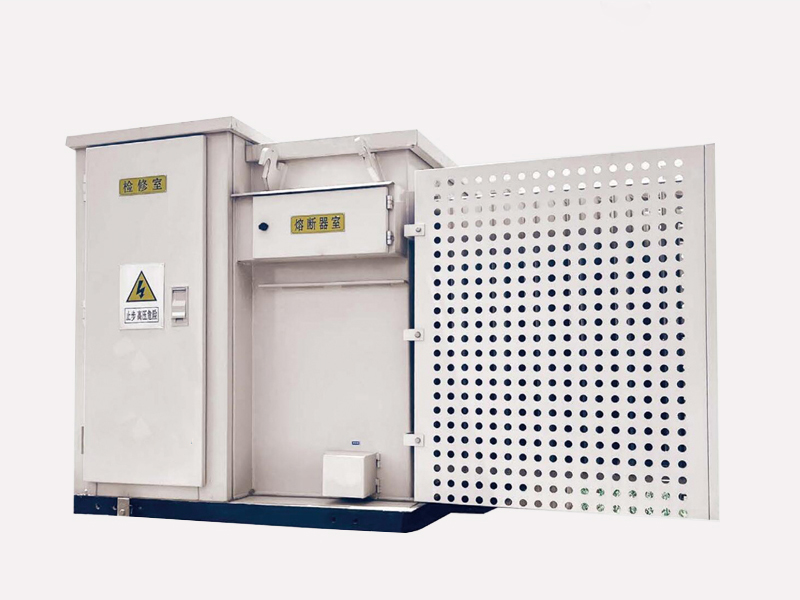
Compact Prefabricated Substation
Common Prefabricated Substation Technical Specifications
Below are common technical configurations widely used in solar farms, industrial plants, mining operations, BESS projects, and utility grid applications.
Standard Technical Specification Table
| Item | Specification Range |
|---|---|
| Rated Voltage | 6kV / 10kV / 20kV / 35kV / 69kV |
| Rated Capacity | 500kVA – 40MVA |
| Frequency | 50Hz / 60Hz |
| Transformer Type | Oil-Immersed / Dry-Type |
| Cooling Method | ONAN / ONAF |
| MV Switchgear | GIS / AIS |
| LV Output Voltage | 400V / 690V |
| Protection Degree | IP54 / IP65 |
| Anti-Corrosion Level | C3 / C4 / C5 |
| Applicable Standards | IEC / IEEE / ANSI |
| Communication Protocol | IEC 61850 / Modbus |
| SCADA Integration | Available |
| Fire Protection System | Optional |
| HVAC System | Intelligent Temperature Control |
| Ambient Temperature | -40°C to +55°C |
| Altitude | ≤ 5000m |
| Installation Type | Outdoor / Containerized |
| Application Industries | Solar, BESS, Mining, Oil & Gas, Railway |
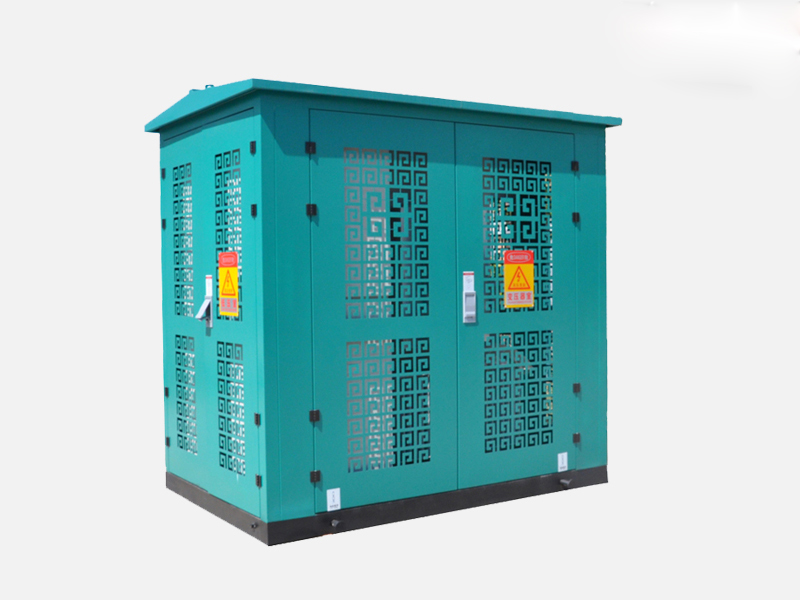
Mini Prefabricated Substation
Recommended Box Type Substation Models for Different Applications
Solar PV & BESS Projects
| Model | Voltage Level | Capacity | Typical Application |
|---|---|---|---|
| YB-12 PV Compact Substation | 10kV / 12kV | 1250–2500kVA | Commercial Solar |
| YB-35 Solar Collector Substation | 35kV | 5–20MVA | Utility Solar Farm |
| Integrated BESS Booster Cabin | 35kV / 69kV | 10–40MVA | Energy Storage System |
Key Features
- PV inverter integration
- DC to AC conversion systems
- Factory pre-commissioning
- Remote desert installation support
- Fast deployment for utility-scale projects
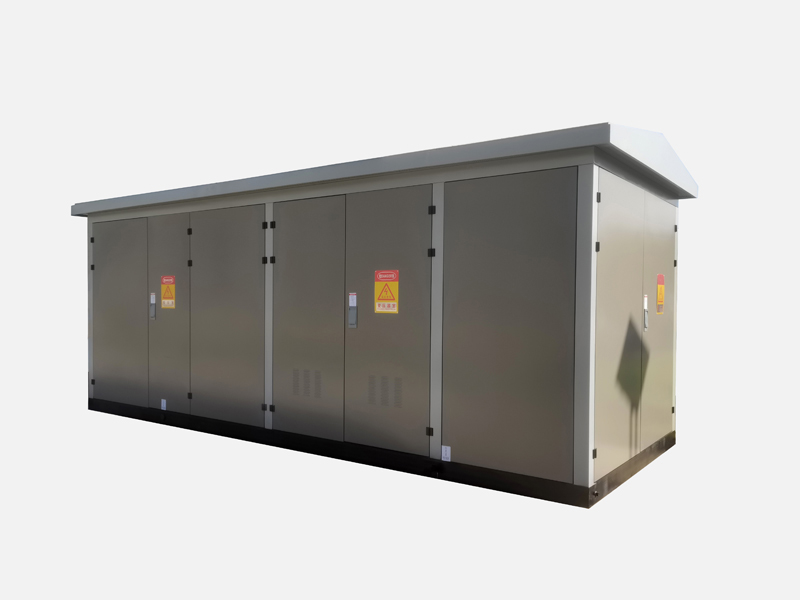
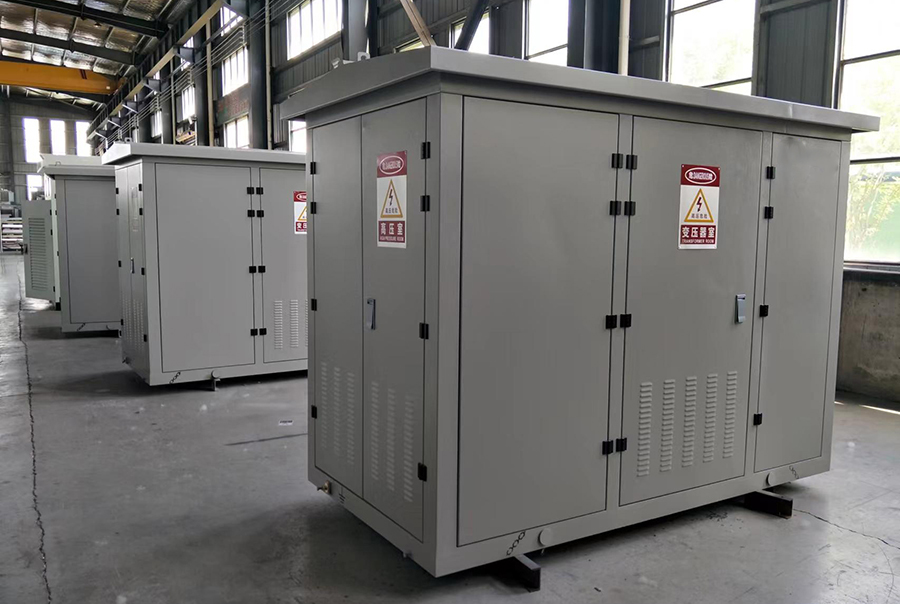
European-style Prefabricated Substation
Industrial & Mining Applications
| Model | Protection Level | Environment | Industry |
|---|---|---|---|
| Industrial Compact Substation | IP54 | Standard Industrial | Manufacturing |
| Mining Modular Substation | IP65 | High Dust & Vibration | Mining |
| Oil & Gas E-House Substation | C5 Anti-Corrosion | Coastal / Humid | Oil & Gas |
Key Features
- Continuous power supply reliability
- High corrosion resistance
- High-temperature adaptability
- Heavy-duty steel structure
- Easy maintenance design
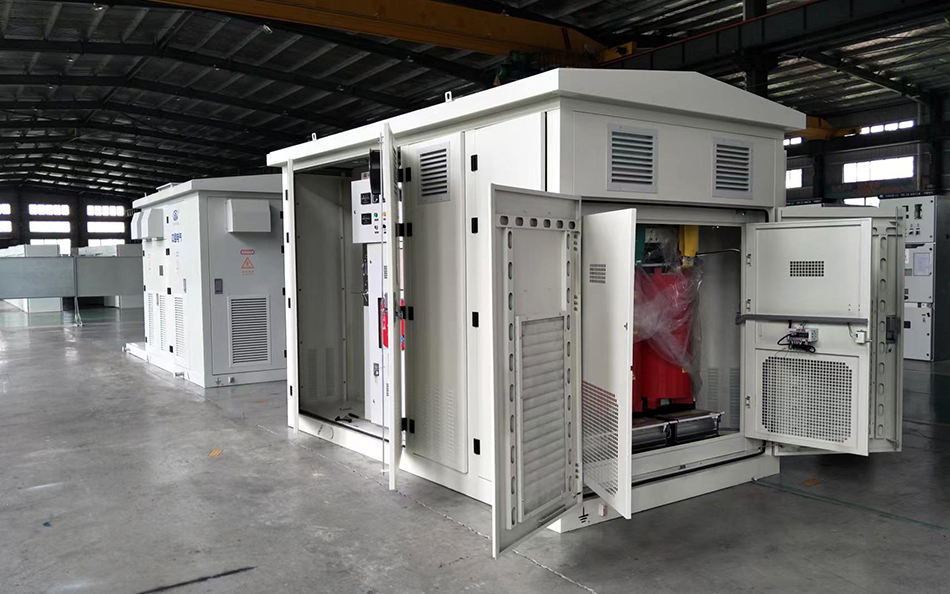
SCB13-2000kva10.50.8kV Step-Up Prefabricated Substation
Why Solar Projects Prefer Prefabricated Substations
The solar industry is one of the fastest-growing application sectors for containerized substations and modular compact substations.
Advantages for Utility-Scale Solar Projects
Reduced Civil Construction
Traditional substations require:
- Concrete buildings
- Cable trenches
- Long onsite installation periods
Prefabricated substations significantly reduce onsite civil engineering work.
Faster Deployment
Factory assembly and testing reduce project schedules by over 40% in many PV projects.
This is critical for:
- EPC schedule control
- Utility grid connection deadlines
- Faster ROI realization
Ideal for Remote Installation
Solar farms are commonly built in:
- Desert environments
- Mountain regions
- Remote industrial areas
Modular substations simplify transportation and installation under difficult site conditions.
Integrated BESS Compatibility
Modern renewable energy substations support:
- PV inverter integration
- Battery energy storage systems (BESS)
- EMS & SCADA systems
- Smart grid communication
This improves overall energy management efficiency.
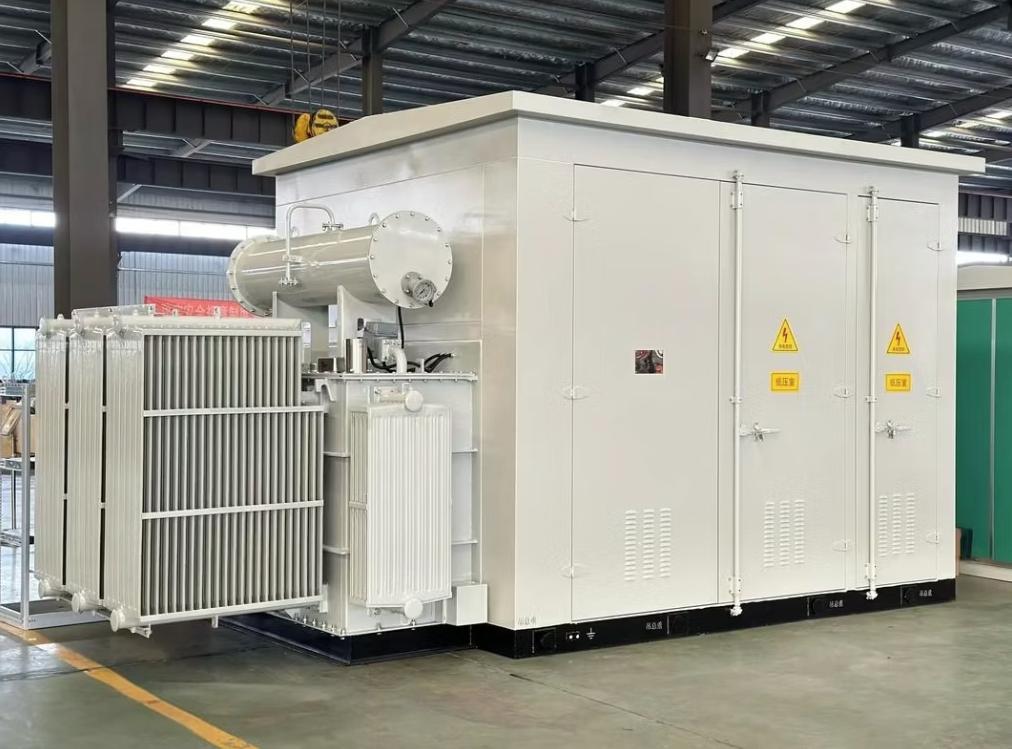
Pre-assembled PVWind Power(Hua-style) Substation
Industrial Power Distribution Requirements
Industrial clients prioritize:
- Continuous operation
- High reliability
- Safety
- Environmental adaptability
Industries requiring advanced modular substations include:
- Mining
- Metallurgy
- Steel mills
- Cement plants
- Chemical plants
- Railway systems
- Data centers
- Oil & Gas facilities
Environmental Adaptability for Harsh Conditions
A professional EPC substation manufacturer should support multiple environmental configurations.
High Protection Design
Anti-Corrosion Protection
- C3 / C4 / C5 anti-corrosion coating systems
Protection Ratings
- IP54 / IP65 enclosure protection
Extreme Environment Adaptability
- Desert climate resistance
- High humidity environments
- Coastal anti-salt corrosion
- High-altitude operation
These features ensure long-term operational stability in harsh industrial conditions.
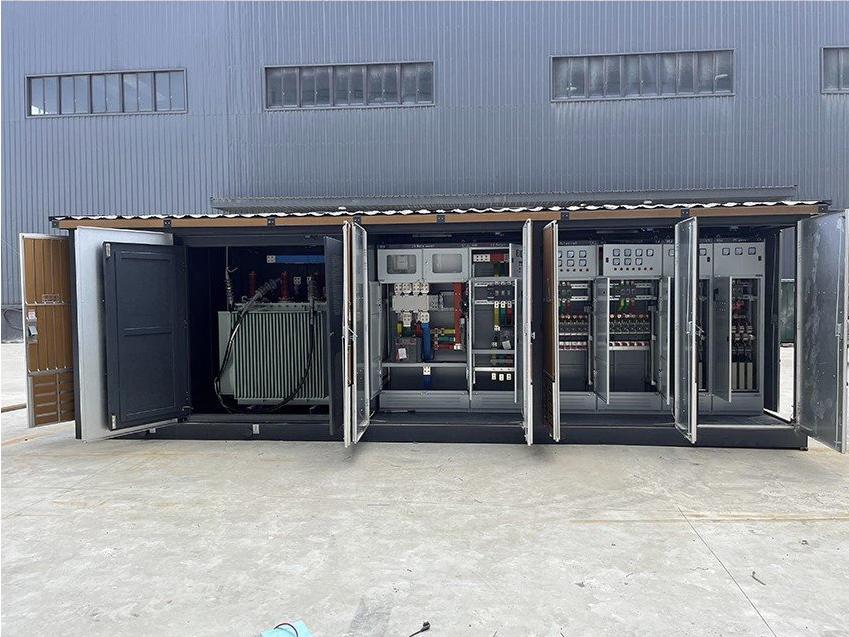
International Standards Compliance
International projects require strict compliance with global standards and certifications.
IEC Standards
- IEC 62271 — High-voltage switchgear
- IEC 60076 — Power transformer standards
- IEC 61439 — Low-voltage assemblies
- IEC 60529 — IP enclosure protection
IEEE / ANSI Standards
- IEEE C57 transformer standards
- ANSI medium-voltage system standards
International Certifications
- CE Certification
- SGS Inspection
- ISO Quality Management
- KEMA Certification
- ASTA Type Testing
Compliance with these standards increases project reliability and international procurement confidence.
Compact Modular Design for Modern Power Systems
Advanced compact substations use intelligent modular engineering to improve efficiency and maintenance accessibility.
Typical Internal Layout
- Transformer room
- MV switchgear room
- LV distribution room
- Cable basement
- Control room
- HVAC system
- Fire suppression system
Engineering Design Highlights
Internal Arc Protection
Arc-resistant structures improve operational safety.
Optimized Busbar Layout
Improves electrical reliability and thermal performance.
Intelligent Cable Routing
Simplifies maintenance and installation.
Thermal Management System
Integrated HVAC and ventilation systems maintain stable operating temperatures.
Case Study: 20MVA Solar Prefabricated Substation for Uzbekistan PV Project
A solar EPC contractor required a 35kV turnkey prefabricated substation for a utility-scale photovoltaic project in Uzbekistan.
Project Information
| Parameter | Details |
|---|---|
| Project Country | Uzbekistan |
| Application | Utility Solar Farm |
| Capacity | 20MVA |
| Voltage Level | 35kV |
| Climate | Desert Environment |
| Delivery Time | 45 Days |
| Cooling System | Intelligent HVAC |
| SCADA System | IEC 61850 |
| Protection Level | IP65 |
Customer Benefits
Reduced Installation Time by 40%
Factory pre-commissioning minimized onsite installation work.
Lower Civil Construction Cost
Compact modular design reduced concrete infrastructure requirements.
Easy Transportation
Containerized structure simplified transportation to remote desert locations.
Improved Project Reliability
Complete factory testing ensured stable operation before shipment.
How to Choose the Best Prefabricated Substation Manufacturer
When selecting a supplier, EPC contractors should focus on:
Engineering Integration Capability
- Primary & secondary system integration
- SCADA & EMS compatibility
- Grid connection expertise
Manufacturing Quality
- Automated fabrication systems
- Factory routine testing
- International certification compliance
Overseas Project Experience
- Export logistics capability
- Multi-country technical standards
- Global project support
Customization Capability
- Voltage customization
- Environmental adaptability
- Industry-specific design
Conclusion
As global renewable energy and industrial infrastructure continue to expand, prefabricated substations are becoming the core solution for modern modular power distribution systems.
Compared with traditional substations, turnkey integrated substations provide:
- Faster deployment
- Lower installation cost
- Reduced project risk
- Better environmental adaptability
- Improved system integration efficiency
For EPC contractors, utility developers, and industrial project owners, choosing an experienced prefabricated substation manufacturer is critical for long-term operational success and project profitability.
Modern modular substations are no longer simple electrical products — they are intelligent integrated infrastructure systems for the future of global energy development.
You may also find these interesting: